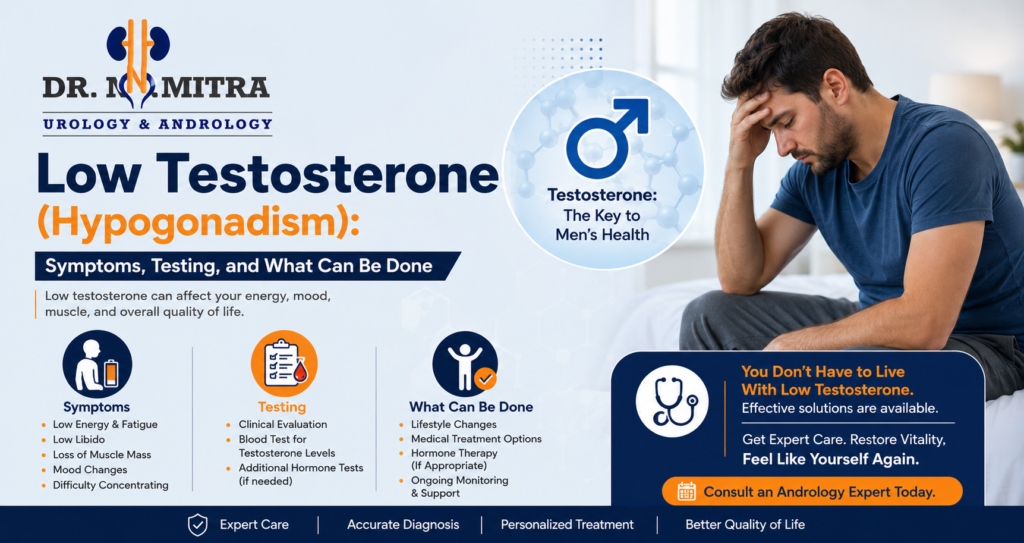
Testosterone is the primary male sex hormone responsible for muscle strength, bone health, energy levels, sex drive, sperm production, and overall well-being. While testosterone naturally declines with age, abnormally low levels—known as hypogonadism—can significantly affect a man’s physical, emotional, and sexual health.
Many men ignore early signs such as persistent fatigue, low libido, mood changes, or reduced muscle mass, assuming they are simply part of aging. However, these symptoms may indicate an underlying medical condition that requires evaluation.
If you’re searching for low testosterone symptoms men, this guide explains the common signs, possible causes, diagnostic tests, treatment options, and when to consult a specialist.
What Is Low Testosterone (Hypogonadism)?
Hypogonadism is a condition in which the body does not produce enough testosterone to support normal bodily functions. It may develop due to problems with the testicles (primary hypogonadism) or because the brain fails to send the necessary hormonal signals to stimulate testosterone production (secondary hypogonadism).
Low testosterone can occur at any age, although it becomes more common after the age of 40. Early diagnosis and appropriate treatment can help improve symptoms and quality of life.
Low Testosterone Symptoms in Men
The signs of low testosterone often develop gradually and may vary depending on age and overall health.
Reduced Sex Drive
One of the earliest and most common symptoms is a noticeable decline in sexual desire or libido.
Erectile Dysfunction
Although erectile dysfunction has many causes, low testosterone may contribute to difficulty achieving or maintaining an erection, particularly when accompanied by reduced sexual interest.
Constant Fatigue
Men with low testosterone often feel tired even after adequate sleep and may notice a significant reduction in energy throughout the day.
Loss of Muscle Mass and Strength
Testosterone helps maintain muscle growth. Low levels can lead to decreased muscle mass, reduced strength, and slower recovery after physical activity.
Increased Body Fat
Some men develop increased abdominal fat or enlarged breast tissue (gynecomastia) due to hormonal imbalance.
Mood Changes
Low testosterone may affect emotional well-being, leading to irritability, anxiety, poor concentration, lack of motivation, or symptoms of depression.
Reduced Bone Strength
Long-term testosterone deficiency may decrease bone density, increasing the risk of fractures and osteoporosis.
Fertility Problems
Low testosterone can reduce sperm production, making it more difficult for couples to conceive naturally.
What Causes Low Testosterone?
Several factors can contribute to hypogonadism, including:
- Natural aging
- Obesity
- Type 2 diabetes
- Chronic kidney or liver disease
- Pituitary gland disorders
- Testicular injury or infection
- Cancer treatments such as chemotherapy or radiation
- Genetic conditions
- Long-term use of certain medications, including steroids and opioids
Identifying the underlying cause is essential before starting treatment.
How Is Low Testosterone Diagnosed?
Diagnosis involves evaluating symptoms along with laboratory testing.
Medical History and Physical Examination
Your doctor will discuss your symptoms, lifestyle, medications, medical history, and reproductive health before performing a physical examination.
Blood Tests
A morning blood sample is typically recommended because testosterone levels are highest early in the day.
Tests may include:
- Total testosterone
- Free testosterone
- Luteinizing hormone (LH)
- Follicle-stimulating hormone (FSH)
- Prolactin
- Thyroid function tests
If testosterone levels are low, repeat testing may be advised to confirm the diagnosis.
Additional Investigations
Depending on the findings, your doctor may recommend:
- Semen analysis (if fertility is a concern)
- Bone density scan
- MRI of the pituitary gland
- Genetic testing in selected cases
Treatment Options for Low Testosterone
Treatment depends on the cause, age, symptoms, and future fertility plans.
Lifestyle Modifications
Men with mild testosterone deficiency may benefit from:
- Regular strength and resistance training
- Maintaining a healthy body weight
- Eating a balanced, protein-rich diet
- Getting 7–8 hours of quality sleep
- Reducing stress
- Limiting alcohol intake
- Quitting smoking
Healthy lifestyle changes can naturally support hormone production and improve overall well-being.
Testosterone Replacement Therapy (TRT)
For men with confirmed hypogonadism and persistent symptoms, doctors may recommend Testosterone Replacement Therapy.
TRT is available in different forms, including:
- Gels
- Skin patches
- Injections
- Implantable pellets
Treatment should only be started after a thorough evaluation, as it may not be suitable for every patient, especially men planning to have children.
Treating Underlying Conditions
Managing diabetes, obesity, thyroid disorders, or pituitary gland problems can improve testosterone levels without the need for hormone replacement in some cases.
Can Low Testosterone Be Prevented?
Although aging cannot be prevented, maintaining a healthy lifestyle can help support normal testosterone levels.
You can reduce your risk by:
- Staying physically active
- Maintaining a healthy weight
- Eating a nutritious diet
- Managing chronic medical conditions
- Avoiding smoking and excessive alcohol
- Prioritizing adequate sleep
- Scheduling regular health check-ups
FAQs:
What is the normal testosterone level in men?
Normal testosterone levels vary by age and laboratory standards but generally range between 300 and 1,000 ng/dL in adult men.
Can low testosterone cause erectile dysfunction?
Yes. Low testosterone can reduce libido and contribute to erectile dysfunction, although many other physical and psychological factors may also be involved.
Is low testosterone a normal part of aging?
Testosterone naturally declines with age, but significantly low levels associated with symptoms are not considered a normal part of aging and should be evaluated by a doctor.
Can low testosterone affect fertility?
Yes. Low testosterone may reduce sperm production and fertility. Men planning to have children should discuss treatment options with a fertility specialist before starting testosterone therapy.
When Should You See a Doctor?
Consult a healthcare professional if you experience:
- Persistent fatigue
- Low sex drive
- Erectile dysfunction
- Reduced muscle strength
- Mood changes or depression
- Difficulty conceiving
- Unexplained weight gain
Early diagnosis allows appropriate treatment and helps prevent long-term complications such as osteoporosis and infertility.
Conclusion
Recognizing low testosterone symptoms men is the first step toward improving your health and quality of life. While fatigue, low libido, and reduced muscle strength may seem like normal signs of aging, they can also indicate hypogonadism, a treatable medical condition. Through proper testing, lifestyle improvements, and individualized treatment, many men regain their energy, confidence, and overall well-being. If you’re experiencing symptoms of low testosterone, consult a qualified urologist or men’s health specialist for an accurate diagnosis and a personalized treatment plan.
Read More: