
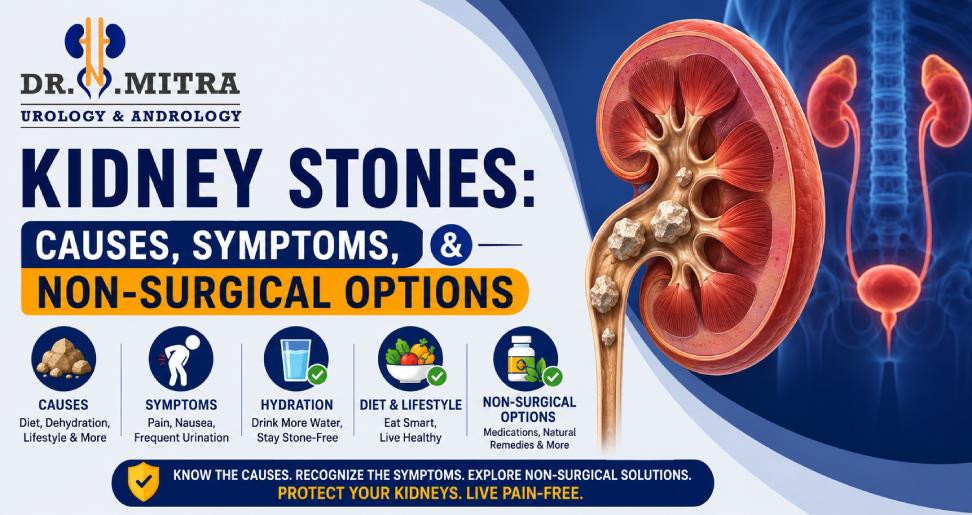
Kidney stones are one of the most common urinary tract conditions affecting people of all ages. These hard mineral deposits form inside the kidneys and can cause severe pain when they move through the urinary tract. Understanding kidney stones causes treatment options is essential for early diagnosis and effective management. While some kidney stones pass naturally, others may require medical attention to prevent complications.
In this blog, we will discuss the causes, symptoms, prevention methods, and non-surgical treatment options for kidney stones. We will also explain when you should consult an experienced urologist like Dr. N Mitra for expert care.
What Are Kidney Stones?
Kidney stones are hard masses made of minerals and salts that develop in the kidneys. They can vary in size from tiny crystals to larger stones that block the urinary tract. When stones travel through the ureters, they can cause significant discomfort and urinary symptoms.
The most common types of kidney stones include:
- Calcium stones
- Uric acid stones
- Struvite stones
- Cystine stones
The type of stone often determines the most appropriate treatment and prevention strategy.
Kidney Stones Causes Treatment: Understanding the Root Cause
Knowing the causes of kidney stones is the first step toward proper treatment. Several factors can contribute to stone formation.
1. Dehydration
One of the leading causes of kidney stones is inadequate water intake. When urine becomes concentrated, minerals can crystallize and form stones.
2. Dietary Habits
Consuming excessive amounts of salt, sugar, and animal protein may increase the risk of stone formation. Diets high in oxalate-rich foods can also contribute to certain types of kidney stones.
3. Family History
If someone in your family has experienced kidney stones, you may have a higher risk of developing them.
4. Obesity
Being overweight can alter the body’s metabolism and increase the likelihood of stone formation.
5. Medical Conditions
Certain health conditions can increase the risk of kidney stones, including:
- Hyperparathyroidism
- Recurrent urinary tract infections
- Gout
- Chronic digestive disorders
6. Certain Medications
Some medications and supplements may increase mineral levels in urine, promoting stone development.
Understanding these causes helps doctors determine the best kidney stones causes treatment approach for each patient.
Common Symptoms of Kidney Stones
Kidney stones may not cause symptoms until they start moving within the urinary tract. Once they begin to travel, symptoms can become intense.
Common symptoms include:
- Severe pain in the back or side
- Pain that radiates to the lower abdomen and groin
- Burning sensation during urination
- Frequent urge to urinate
- Blood in the urine
- Cloudy or foul-smelling urine
- Nausea and vomiting
- Fever and chills in case of infection
The severity of symptoms often depends on the size and location of the stone.
Kidney Stones Symptoms in Women
Although kidney stones affect both men and women, some symptoms can be particularly noticeable in female patients.
Kidney Stones Symptoms in Women Include:
- Sharp pain in the lower abdomen
- Pelvic discomfort
- Pain during urination
- Frequent urination
- Blood in urine
- Nausea and vomiting
- Pain that may be mistaken for menstrual cramps or gynecological conditions
Because these symptoms can resemble urinary tract infections or reproductive health issues, women should seek medical evaluation if symptoms persist or worsen.
How Are Kidney Stones Diagnosed?
Accurate diagnosis is important for determining the most effective treatment plan.
Doctors may recommend:
Physical Examination
A detailed assessment of symptoms and medical history.
Urine Tests
Urine analysis helps identify infection, blood, or stone-forming substances.
Blood Tests
Blood tests can detect abnormalities in kidney function and mineral levels.
Imaging Tests
Diagnostic imaging may include:
- Ultrasound
- X-rays
- CT scans
These tests help determine the size, location, and type of kidney stone.
Non-Surgical Options for Kidney Stone Treatment
Many kidney stones can be treated without surgery. The choice of treatment depends on the size, location, and composition of the stone.
1. Increased Fluid Intake
Drinking plenty of water helps flush small stones out of the urinary tract naturally.
Patients are often advised to consume enough fluids to produce clear or light-colored urine throughout the day.
2. Pain Management
As stones pass, discomfort can be significant. Doctors may prescribe medications to reduce pain and improve comfort.
3. Medical Expulsive Therapy
Certain medications can relax the muscles of the ureter, helping stones pass more easily.
This approach is commonly used for small to medium-sized stones.
4. Dietary Modifications
Dietary changes play a crucial role in both treatment and prevention.
Recommendations may include:
- Reducing salt intake
- Limiting excessive animal protein
- Maintaining adequate calcium intake
- Avoiding excessive consumption of stone-forming foods
5. Treatment of Underlying Conditions
Managing conditions such as gout, recurrent infections, or metabolic disorders can help prevent future stone formation.
How to Prevent Kidney Stones
Many people wonder how to prevent kidney stones after experiencing them once. Prevention is often possible through simple lifestyle changes.
Stay Hydrated
Drink plenty of water throughout the day. Proper hydration is one of the most effective ways to reduce the risk of stone formation.
Reduce Salt Consumption
Excess sodium increases calcium levels in urine, which can contribute to stone development.
Eat a Balanced Diet
Include:
- Fresh fruits
- Vegetables
- Whole grains
- Moderate amounts of lean protein
Maintain a Healthy Weight
Weight management supports overall kidney health and reduces stone risk.
Limit Sugary Beverages
Soft drinks and sugary drinks may increase the likelihood of kidney stone formation.
Follow Medical Advice
If you have a history of kidney stones, regular follow-up visits and monitoring can help prevent recurrence.
When Should You See a Urologist?
Medical attention is necessary if you experience:
- Severe or persistent pain
- Blood in urine
- Fever with urinary symptoms
- Difficulty urinating
- Recurrent kidney stones
Early evaluation can prevent complications and improve treatment outcomes.
Consult Dr. N Mitra for Expert Kidney Stone Care
If you are experiencing symptoms of kidney stones or looking for effective non-surgical treatment options, consulting an experienced urologist is essential. Dr. N Mitra provides comprehensive evaluation, accurate diagnosis, and personalized treatment plans for patients suffering from kidney stones and other urinary tract conditions.
With a patient-focused approach and modern diagnostic techniques, Dr. N Mitra helps individuals manage kidney stones effectively while minimizing discomfort and preventing recurrence.
Conclusion
Kidney stones can be painful and disruptive, but timely diagnosis and proper management can significantly improve outcomes. Understanding kidney stones causes treatment options allows patients to make informed decisions about their health. Recognizing early warning signs, including kidney stones symptoms in women, and learning how to prevent kidney stones can reduce the risk of future episodes.
Whether through hydration, medication, dietary changes, or expert medical guidance, many kidney stones can be managed successfully without surgery. If you experience symptoms or have a history of kidney stones, seeking professional care from Dr. N Mitra can help you protect your kidney health and achieve lasting relief.