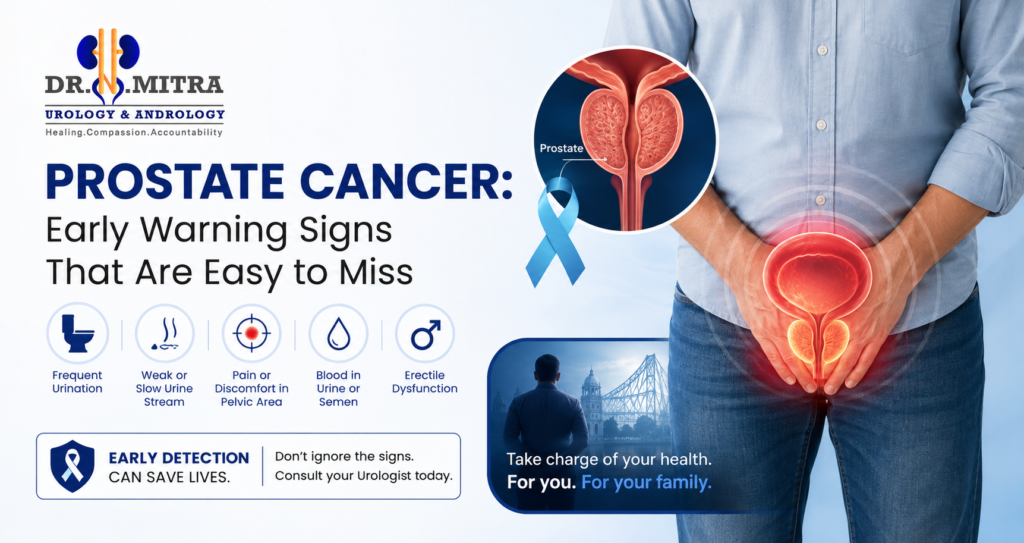
Prostate cancer can develop quietly, without obvious discomfort in its earliest stages. Some men notice changes in urination; others feel completely well. Knowing prostate cancer early signs helps men recognise changes and seek advice. In Kolkata, prostate problems may be mistaken for ordinary ageing.
What Is Prostate Cancer?
The prostate is a gland below the bladder that helps produce seminal fluid. Prostate cancer develops when cells in this gland grow abnormally. Some grow slowly; others spread beyond the prostate. Early detection may provide more treatment options, but symptoms alone cannot confirm or rule out cancer.
What Is the First Hint of Prostate Cancer?
There is no single first hint. Early prostate cancer often causes no symptoms at all. When changes occur, they may include a weaker urine stream, difficulty starting urination, or needing to urinate more frequently, especially at night. Blood in urine or semen also needs medical assessment.
These signs are not proof of cancer. An enlarged prostate, inflammation, infection, and other conditions can cause similar problems. Do not dismiss persistent changes as ageing. A clinician can assess the cause.
Prostate Cancer Early Signs You Should Not Ignore
1. Changes in urination
You may find it difficult to begin passing urine, notice a weak or interrupted stream, or feel that your bladder has not emptied completely. Increased nighttime bathroom visits can disrupt sleep. These symptoms have several possible causes and deserve assessment if persistent.
2. Blood in urine or semen
Pink, red or brown urine, or blood in semen, should not be ignored. Infection and other conditions may explain the change, but prompt evaluation is important.
3. Persistent pain
Back, hip or pelvic discomfort has many causes. Advanced prostate cancer can spread to bones and cause persistent pain. New, unexplained or worsening pain should be checked, particularly when accompanied by urinary changes or other concerning symptoms.
4. Sexual changes or unexplained fatigue
Some men experience painful ejaculation or difficulty getting an erection, although these symptoms are common with conditions unrelated to cancer. Advanced disease may also cause tiredness or unintended weight loss. These symptoms are not specific to cancer, but persistent changes warrant advice.
What Are the Symptoms of Prostate Disease?
“Prostate disease” describes several conditions, not just cancer. Benign prostatic hyperplasia (BPH) is a non-cancerous enlargement that can obstruct urine flow. Prostatitis is inflammation of the prostate and may cause pelvic discomfort, painful urination or fever. Prostate cancer may produce no early symptoms or may cause similar urinary changes.
Because symptoms overlap, guessing is unreliable. A clinician may review your history, examine you and recommend tests based on your age, symptoms and risk factors. Fever with severe urinary symptoms, inability to pass urine, or feeling seriously unwell requires urgent medical care.
Who Has a Higher Risk?
Age is an important risk factor, and risk generally increases as men grow older. Having a father or brother diagnosed with prostate cancer, especially at a younger age, can increase risk. Some inherited genetic changes also matter. Tell your doctor about close relatives with prostate or related cancers.
Risk factors do not make cancer inevitable, and no family history does not eliminate risk. Men in Kolkata should discuss their individual risk with a qualified healthcare professional rather than relying on online checklists or a fixed age rule.
How Is Prostate Cancer Detected?
Assessment may include a medical history, physical examination and a prostate-specific antigen (PSA) blood test. A digital rectal examination may also be discussed. PSA can rise for reasons other than cancer, including benign enlargement or inflammation, so one result cannot diagnose cancer by itself. Depending on findings, a clinician may recommend repeat testing, imaging or a biopsy.
Screening decisions should be individualised. Discuss benefits, false-positive results, further tests and the possibility of finding a slow-growing cancer that may never cause harm. Ask what approach is appropriate for your age, health, family history and preferences.
What Foods Should I Avoid After Having Prostate Cancer?
No single food has been proven to cure prostate cancer, and diet should not replace treatment. After diagnosis, eat a balanced diet and ask your oncology team about treatment-related nutritional needs.
Consider limiting processed meats such as sausages and bacon, frequent large portions of red meat, highly processed snacks and sugary drinks. Avoid excessive alcohol, and maintain a healthy weight where possible. Build meals around vegetables, fruits, whole grains, beans and other suitable protein sources. These choices support health but do not treat an existing tumour.
Do not start supplements, restrictive diets or high-dose vitamins without discussing them with your care team. Products can interact with treatment, and unnecessary restrictions may cause poor nutrition. If appetite, weight or digestion changes during treatment, request personalised dietary advice.
When Should You See a Doctor in Kolkata?
Book a medical appointment if urinary changes persist, you notice blood in urine or semen, or you experience unexplained pain. Seek urgent care if you cannot pass urine, have severe symptoms, or develop new leg weakness or numbness with back pain.
If you are concerned about prostate cancer early signs, consult Dr. Nilanjan Mitra or an appropriate qualified specialist in Kolkata for an assessment and guidance about further testing. Do not self-diagnose or delay care.
FAQs:
Can prostate cancer occur without symptoms?
Yes. Early prostate cancer often causes no noticeable symptoms, which is why risk-based discussions about testing can be important.
Does frequent urination mean prostate cancer?
No. Frequent urination can result from BPH, infection, diabetes, medicines or other causes. Assessment helps determine the reason.
Can diet prevent or cure prostate cancer?
No diet guarantees prevention or cure. A balanced diet supports overall health, while screening and treatment decisions should be made with qualified healthcare professionals.
Takeaway
Prostate cancer may be silent at first, and urinary symptoms are not unique to cancer. Notice persistent changes, understand your personal risk and seek professional guidance. For Kolkata residents, timely evaluation and informed screening discussions can help clarify the next steps without unnecessary fear.
Read More: