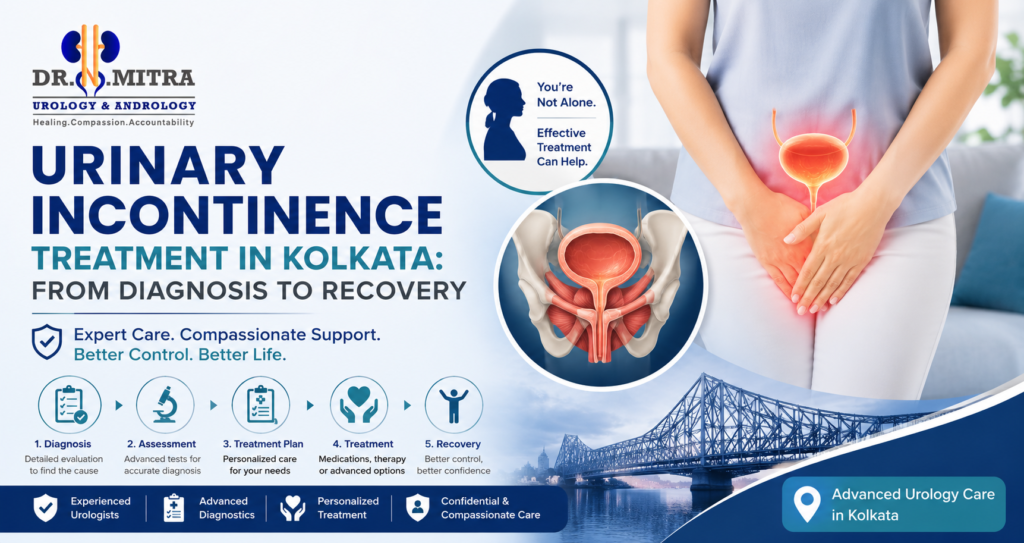
Urine leakage can be frustrating, embarrassing, and disruptive. You may leak when coughing, feel a sudden urge before reaching the toilet, or wake several times at night. These symptoms are not an inevitable part of ageing, and you do not have to manage them alone. Understanding the cause is the first step towards effective incontinence treatment in Kolkata.
What Is Urinary Incontinence?
Urinary incontinence means losing urine unintentionally. It can affect women and men at different ages and may develop after childbirth, during menopause, following prostate treatment, or alongside certain medical conditions. The amount of leakage may range from a few drops to a larger loss.
Although it can affect confidence, sleep, travel, exercise, and social activities, treatment often reduces symptoms substantially. A consultation helps identify the type of leakage and build a plan around your health, routine, and goals.
What Causes Urine Leakage?
Treatment depends on the pattern and cause. Common types include:
- Stress incontinence: Urine leaks during coughing, sneezing, laughing, lifting, or exercise, often because pelvic-floor support or the urinary sphincter is weakened.
- Urge incontinence: A sudden, difficult-to-control urge to urinate is followed by leakage. An overactive bladder may contribute.
- Mixed incontinence: Stress and urge symptoms occur together.
- Overflow incontinence: The bladder does not empty fully, so urine dribbles or leaks. Prostate enlargement, obstruction, or nerve problems may be involved.
- Functional incontinence: Mobility, memory, or difficulty reaching a toilet in time contributes to accidents.
Urinary infection, constipation, some medicines, diabetes, neurological conditions, pregnancy, childbirth, and prostate problems may also influence bladder control. Do not assume the cause without an assessment.
How Is Urinary Incontinence Diagnosed?
A doctor will ask when leakage occurs, how often you urinate, whether urgency or pain is present, and which medicines you take. You may be asked to keep a bladder diary for several days, noting drinks, toilet visits, urgency, and leakage episodes.
Depending on your symptoms, assessment may include a physical examination, urine test, blood tests, or measurement of urine left in the bladder after urination. Further tests are sometimes needed if the diagnosis is unclear or treatment has not helped. In Kolkata, sharing your symptoms honestly with a qualified urology specialist can help guide appropriate testing.
What Is the Best Treatment for Urinary Incontinence?
There is no single best treatment for everyone. The right option depends on the type of incontinence, severity, underlying cause, general health, and personal preferences. Many people begin with non-surgical care.
1. Pelvic-Floor Muscle Training
Pelvic-floor exercises, often called Kegel exercises, strengthen muscles that support the bladder and help control urine flow. A trained clinician or pelvic-floor physiotherapist can explain how to identify and contract the correct muscles. Consistent practice over several months may improve leakage, particularly stress incontinence. Avoid practising by repeatedly stopping urine midstream; that is not a recommended exercise routine.
2. Bladder Training
Bladder training may help people with urgency or urge incontinence. It involves following a planned toilet schedule and gradually extending the interval between visits, as advised by a clinician. Relaxed breathing and techniques to manage sudden urgency may also help. Progress takes time, so track symptoms and follow the plan consistently.
3. Lifestyle Adjustments
Simple changes can support treatment. Reduce caffeine if it worsens urgency, limit alcohol where relevant, and drink enough water rather than severely restricting fluids. Treat constipation, maintain a healthy weight if appropriate, and plan bathroom access during travel. If nighttime urination is a problem, ask your clinician how to time fluids safely.
4. Medicines and Other Treatments
Depending on the diagnosis, medicines may calm an overactive bladder or address an underlying problem such as prostate enlargement. Some patients may benefit from specialised procedures, nerve stimulation, or bladder injections when initial treatments are insufficient. Medicines can have side effects and are not suitable for everyone; do not start, stop, or change them without medical advice.
What Is the Best Surgery for Incontinence?
The best procedure depends on why leakage occurs and the patient’s anatomy and medical history. For selected women with stress incontinence, a sling procedure or colposuspension may be considered. For some men, particularly after prostate surgery, options may include a male sling or an artificial urinary sphincter. Leakage caused by blockage may require treatment of that obstruction.
Surgery is not usually the first step for every patient. Discuss expected benefits, risks, recovery time, alternatives, and the possibility that symptoms may persist or return. A specialist should recommend a procedure only after confirming the likely cause and considering less invasive options.
How Can You Regain Bladder Control?
Start by recording leakage patterns and arranging an assessment rather than feeling embarrassed or avoiding outings. Follow your prescribed exercise or bladder-training plan, take medicines exactly as directed, and attend follow-up appointments. Absorbent pads can provide temporary confidence while treatment begins working, but they do not treat the underlying cause.
Seek urgent medical care if you suddenly cannot pass urine, develop new loss of bladder control with severe back pain or leg weakness, or have fever with significant urinary symptoms. Blood in the urine also needs prompt medical evaluation.
Incontinence Treatment in Kolkata: When to Seek Help
Speak to a qualified healthcare professional if urine leakage is persistent, worsening, affecting sleep, or limiting work and daily activities. Do not assume it is simply ageing or a problem you must tolerate. An individual evaluation can distinguish bladder overactivity, pelvic-floor weakness, obstruction, infection, and other possible causes.
Patients seeking incontinence treatment in Kolkata can consult Dr. Nilanjan Mitra or an appropriate qualified urology specialist to discuss symptoms, diagnostic options, and a personalised treatment plan. Bring your medication list and any bladder diary or previous test reports to the appointment.
FAQs:
Can urinary incontinence be cured?
Some causes can be corrected, while others can be managed successfully. Outcomes depend on the diagnosis, treatment, and individual health.
Does drinking less water stop urine leakage?
Severely restricting fluids can cause dehydration and may worsen bladder irritation. Adjust fluid intake with professional guidance.
Are pelvic-floor exercises enough?
They help many patients, but not everyone. Correct technique and consistency matter, and other treatments may be needed.
Takeaway
Urinary leakage is a medical symptom, not a personal failure. With accurate diagnosis and suitable care, many people experience meaningful improvement. Seek advice early, explore evidence-based options, and choose a treatment plan that supports your health and everyday confidence.
Read More: