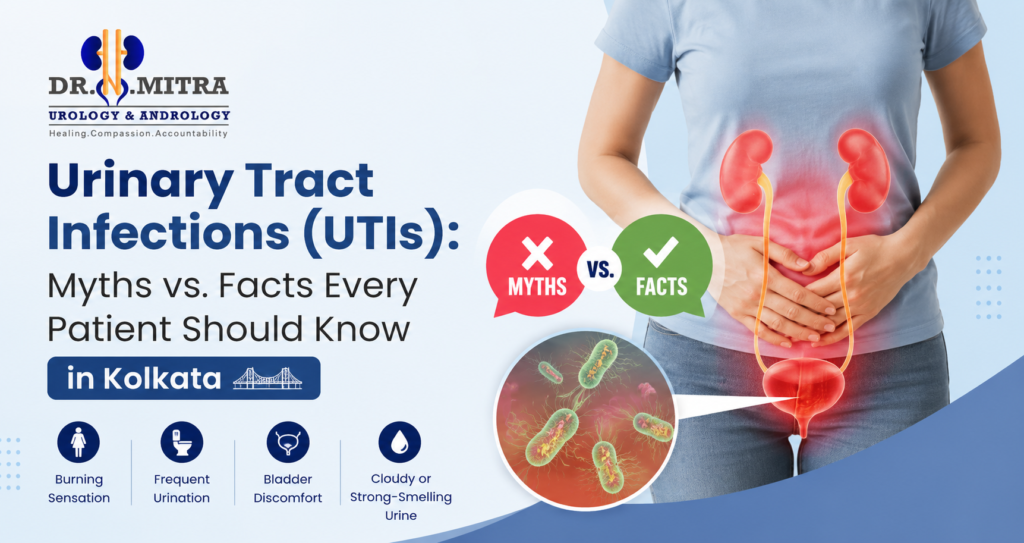
A burning sensation while passing urine, frequent bathroom trips, or lower abdominal discomfort may signal a urinary tract infection (UTI). Myths can delay care. Knowing the facts helps patients recognise symptoms, seek advice, and avoid unsafe remedies. In Kolkata, consult a qualified doctor if symptoms persist or worsen. Seek care promptly if symptoms are severe or new.
What Is a Urinary Tract Infection?
A urinary tract infection occurs when microbes, usually bacteria, enter and multiply in the urinary system. It may affect the urethra, bladder, or kidneys. Bladder infections are common; kidney infections can be serious. UTIs affect all ages and sexes, but are more common in women because their urethra is shorter.
UTI Myths vs. Facts: What Patients Should Know
Myth 1: Only women get UTIs
Fact: Women experience UTIs more often, but men, older adults, and children can develop them too. Risk may rise with urinary blockage, an enlarged prostate, catheter use, or difficulty emptying the bladder. Symptoms deserve assessment regardless of age or sex.
Myth 2: Burning urine always means a UTI
Fact: Burning during urination is common with a UTI, but irritation, sexually transmitted infections, stones, and other conditions can cause it too. A clinician considers the full symptom pattern and may recommend a urine test. Do not take antibiotics based on one symptom or an old prescription.
Myth 3: A UTI will clear up if I drink lots of water
Fact: Water supports hydration, but it does not reliably cure an established bacterial infection. Delayed assessment may allow it to worsen. Drink fluids as appropriate for your health, but do not substitute water, cranberry products, or home remedies for prescribed treatment.
Myth 4: UTIs happen only because of poor hygiene
Fact: A UTI does not mean someone is unclean. Bacteria can enter the urinary tract in several ways. Sexual activity, menopause-related changes, pregnancy, urinary retention, catheters, and some health conditions may increase risk. Use gentle hygiene; harsh washes and scented products can irritate sensitive skin.
Myth 5: Antibiotics are unnecessary once symptoms improve
Fact: If antibiotics are prescribed, follow the instructions and ask before stopping or changing them. Feeling better does not always mean the infection has resolved. Never share antibiotics or use leftovers. Medicine and duration depend on symptoms, test results, allergies, pregnancy, and medical history.
What Are Five Signs and Symptoms of a UTI?
Common symptoms include:
- Burning or pain while urinating: Passing urine may sting or feel uncomfortable.
- Frequent urination: You may need to go more often than usual, sometimes passing only a small amount.
- Urgency: A sudden, strong need to urinate can occur even when the bladder is not full.
- Cloudy, strong-smelling, or bloody urine: These changes can happen with a UTI, but smell or colour alone cannot confirm one.
- Lower abdominal or pelvic discomfort: Pressure or pain around the bladder may accompany other urinary symptoms.
Fever, chills, back or side pain, nausea, or vomiting may indicate a kidney infection and need urgent medical assessment. Confusion, severe weakness, or rapidly worsening illness also needs prompt attention.
What Causes Infection of the Urinary Tract?
Most UTIs occur when bacteria from the bowel area, commonly E. coli, enter the urethra and travel upward. The main cause is bacterial entry and growth, not cold weather alone. Risk factors include:
- A shorter urethra, which makes it easier for bacteria to reach the bladder.
- Sexual activity or use of certain contraceptive products, such as spermicides.
- Pregnancy or hormonal changes after menopause.
- Incomplete bladder emptying, urinary stones, or an enlarged prostate.
- Urinary catheters, diabetes, or conditions that affect the immune system.
These factors do not guarantee infection. A doctor can assess individual risks, especially when UTIs recur. Avoid holding urine for long periods, and empty your bladder when you feel the need; these habits support urinary comfort but cannot guarantee prevention.
How Are UTIs Diagnosed and Treated?
Diagnosis begins with symptoms and medical history. A doctor may request a urine routine test or culture to identify bacteria and guide treatment. Not everyone needs the same tests, and bacteria in urine without symptoms do not always require antibiotics. Pregnancy and certain procedures are important exceptions.
A diagnosed bacterial UTI may require prescribed antibiotics. Take them as directed and contact your clinician if symptoms do not improve in the advised period, return, or worsen. Ask a healthcare professional before using pain relief. Recurrent infections may need further evaluation.
When Should You Seek Medical Help in Kolkata?
Seek advice for painful, frequent, or urgent urination, blood in urine, or persistent symptoms. Get urgent care for fever or chills with urinary symptoms, back or side pain, vomiting, or feeling seriously unwell. Pregnant patients, children, men with suspected UTI, and people with significant medical conditions should seek prompt advice.
In Kolkata, consult Dr. Nilanjan Mitra or an appropriate healthcare professional for an assessment based on your symptoms and history. Avoid self-medication and do not delay care out of embarrassment; UTIs are common and treatable.
FAQs:
What is the main cause of urinary tract infections?
The main cause is bacteria, often E. coli from the bowel area, entering the urethra and multiplying in the urinary tract.
Can a UTI go away on its own?
Some symptoms may settle, but a bacterial infection can persist or spread. Seek medical advice rather than relying on symptoms alone or delaying recommended treatment.
Can I prevent every UTI by drinking more water?
No. Staying hydrated may help, but it cannot prevent every infection. Prevention depends on personal risk factors and medical advice.
Are UTIs contagious?
A typical UTI is not usually passed from person to person. However, urinary symptoms can have other causes, so accurate assessment matters.
The Takeaway
UTI myths can cause worry, unsafe self-treatment, or delays in care. Recognise symptoms, understand common bacterial causes, and follow medical advice. If symptoms develop or recur, seek professional guidance in Kolkata about appropriate tests, treatment, and prevention today.
Read More: