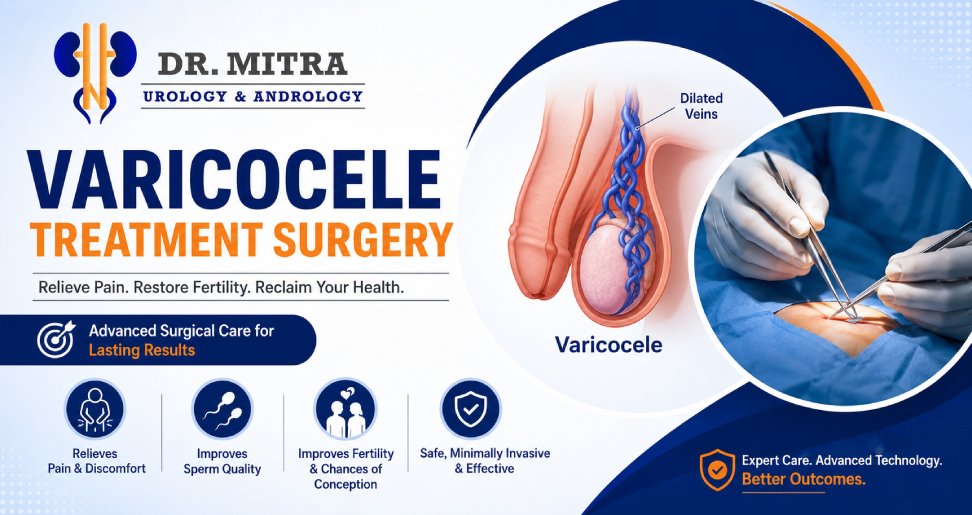
Varicocele is a common condition in which the veins inside the scrotum become enlarged, similar to varicose veins in the legs. While some men with varicocele may not experience noticeable symptoms, others can develop testicular discomfort, swelling, or fertility-related problems. When symptoms are persistent or the condition affects fertility or testicular health, varicocele treatment surgery may be recommended by a qualified urologist.
Understanding the causes, treatment options, surgical procedure, recovery process, and expected outcomes can help patients make informed decisions. For professional evaluation and personalized treatment planning, patients can consult Dr. Nilanjan Mitra, who provides medical guidance based on individual symptoms and clinical findings.
What Is a Varicocele?
A varicocele develops when the veins responsible for carrying blood away from the testicles do not function properly. This can cause blood to collect in the veins, making them enlarged and more prominent.
Varicoceles commonly occur on the left side of the scrotum, although they can sometimes affect both sides. They are often discovered during a routine physical examination or while investigating male infertility.
Many varicoceles do not require immediate treatment. However, medical assessment becomes important when symptoms such as pain, testicular size changes, or fertility difficulties are present.
When Is Varicocele Treatment Surgery Recommended?
Not every patient with a varicocele needs surgery. A doctor may recommend treatment after considering symptoms, physical examination findings, ultrasound results, semen analysis, and overall reproductive health.
Surgery may be considered when:
- Persistent testicular or scrotal pain is associated with the varicocele.
- The affected testicle shows reduced growth or size, particularly in younger patients.
- Semen quality is abnormal and the varicocele may be contributing to male infertility.
- There is evidence of impaired testicular function.
- The varicocele is clinically significant and conservative management has not provided adequate relief.
A consultation with Dr. Nilanjan Mitra can help determine whether surgery is appropriate or whether observation and follow-up may be sufficient.
How Does Varicocele Surgery Work?
The primary objective of varicocele surgery is to stop abnormal blood flow through the enlarged veins while preserving healthy blood vessels, arteries, and the structures needed for normal testicular function.
Depending on the patient’s condition and the surgeon’s recommendation, different surgical techniques may be considered.
1. Microsurgical Varicocelectomy
Microsurgical varicocelectomy is a commonly used surgical approach. A small incision is made, and specialized magnification allows the surgeon to identify and treat the affected veins while attempting to preserve important arteries and lymphatic vessels.
This technique is designed to minimize damage to surrounding structures and may have favorable outcomes in appropriately selected patients.
2. Laparoscopic Varicocelectomy
In laparoscopic surgery, the surgeon uses small abdominal incisions and a camera-assisted technique to identify and treat the affected veins. This approach may be considered in certain cases, including some patients with bilateral varicoceles.
3. Other Treatment Approaches
In selected situations, a non-surgical procedure known as embolization may be considered. During embolization, a specialist uses imaging guidance to block the abnormal vein so that blood can be redirected through healthier vessels.
The most suitable treatment depends on the patient’s symptoms, anatomy, fertility goals, testicular condition, and medical history.
What Happens Before Varicocele Surgery?
Before recommending surgery, the doctor generally performs a detailed evaluation. This may include a physical examination and, when appropriate, scrotal ultrasound with Doppler imaging.
Men being evaluated for fertility problems may also require semen analysis. In some cases, hormonal testing or additional investigations may be recommended.
Patients should discuss existing medical conditions, medications, previous surgeries, allergies, and fertility plans with their doctor. This information can help the treating specialist develop an appropriate treatment plan.
What to Expect During Recovery
Recovery after varicocele treatment surgery varies from person to person and depends on the surgical technique used.
Patients may experience mild discomfort, swelling, or bruising around the surgical area during the initial recovery period. Doctors may recommend rest, supportive underwear, prescribed medication, and temporary restrictions on strenuous physical activity.
It is important to follow the surgeon’s post-operative instructions carefully. Patients should also attend recommended follow-up appointments so that healing and treatment outcomes can be assessed.
The improvement in fertility parameters, when surgery is performed for infertility, may take time. Semen production follows a biological cycle, so doctors may recommend follow-up semen testing after an appropriate interval rather than expecting immediate changes.
Benefits of Varicocele Treatment Surgery
When surgery is appropriately indicated, potential benefits may include:
- Reduction in varicocele-related discomfort.
- Improved blood circulation within the testicular region.
- Protection of testicular function in selected patients.
- Potential improvement in semen parameters in suitable infertility cases.
- Treatment of clinically significant varicocele rather than simply managing symptoms.
However, outcomes vary, and surgery cannot guarantee fertility or complete relief from pain in every patient.
Are There Risks Associated With Surgery?
Like any surgical procedure, varicocele surgery can have potential risks. These may include infection, bleeding, recurrence of varicocele, fluid accumulation around the testicle, or injury to surrounding structures.
The possibility of complications depends on several factors, including the surgical technique, individual anatomy, and overall health. A detailed discussion with the treating urologist is therefore important before deciding on surgery.
Why Choose Expert Evaluation?
Varicocele can range from an incidental finding that requires observation to a condition that may need active treatment. Choosing surgery simply because a varicocele is present is not always necessary.
A personalized medical assessment helps determine whether the condition is affecting testicular health, causing symptoms, or contributing to fertility problems. Dr. Nilanjan Mitra can evaluate the patient’s condition and discuss suitable management options based on the individual’s needs and clinical findings.
Frequently Asked Questions ( FAQs ) :-
Ans :- No. Many varicoceles do not require surgery. Treatment is generally considered when symptoms, testicular changes, or fertility-related concerns justify intervention.
Ans :- The duration depends on the surgical technique and individual circumstances. Your surgeon can provide a more accurate estimate after evaluating your condition.
Ans :- In appropriately selected men, treatment may improve certain semen parameters and potentially support fertility. However, fertility outcomes depend on several factors and cannot be guaranteed.
Ans :- Recurrence is possible, although the likelihood varies according to the treatment technique and individual factors.
Ans :- Consult a urologist if you notice persistent scrotal discomfort, swelling, a feeling of enlarged veins, testicular size changes, or difficulties related to fertility.
Conclusion
Varicocele treatment surgery can be an effective option for selected patients experiencing persistent symptoms, testicular changes, or fertility-related problems. Because not every varicocele requires surgery, proper diagnosis and individualized medical advice are essential before choosing a treatment.
If you are concerned about a varicocele or want to understand whether surgery may be appropriate for your condition, consult Dr. Nilanjan Mitra for a professional evaluation and personalized treatment guidance. Early assessment can help identify the underlying problem and determine the most suitable approach for protecting testicular and reproductive health.