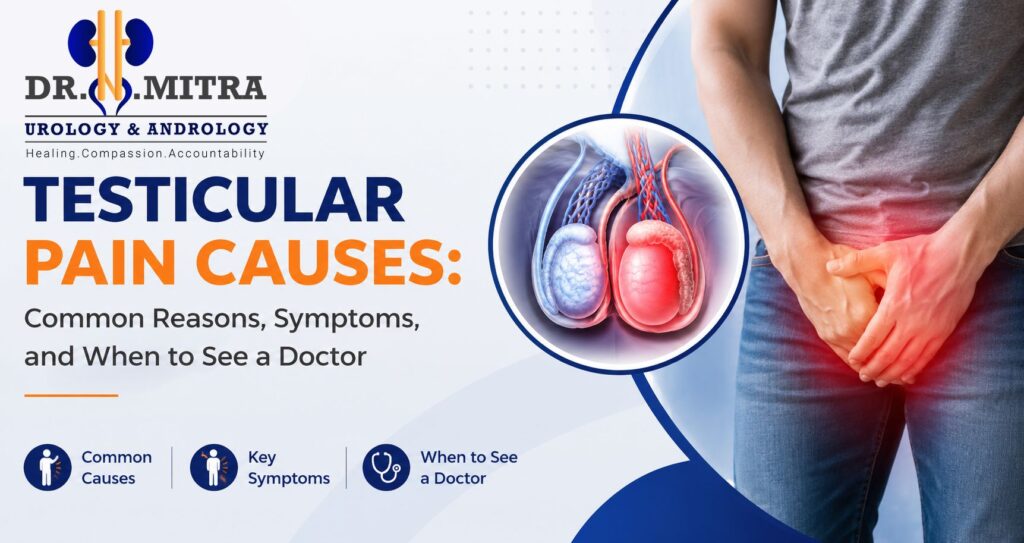
Testicular pain can be uncomfortable, worrying, and sometimes difficult to discuss. While a minor injury or temporary irritation may cause pain, testicular pain can also indicate an infection or a condition requiring urgent medical attention.
The pain may affect one or both testicles and can feel sharp, dull, aching, or throbbing. In some cases, the actual problem may begin in the groin, abdomen, urinary tract, or kidneys and be felt around the testicles.
Understanding the common testicular pain causes, associated symptoms, and warning signs can help you know when medical evaluation is necessary.
What Causes Testicular Pain?
There isn’t one single reason for testicular pain. Some causes are relatively minor, while others need prompt treatment.
1. Testicular Torsion
Testicular torsion is one of the most important causes to recognize because it is a medical emergency. It happens when the spermatic cord twists and reduces or blocks blood flow to the testicle.
Typical symptoms include:
- Sudden and severe testicular pain
- Swelling of the scrotum
- One testicle appearing higher than usual
- Nausea or vomiting
- Lower abdominal pain
Testicular torsion requires emergency treatment. Delaying care can permanently damage the testicle.
If severe testicular pain begins suddenly, don’t wait to see whether it improves on its own. Seek emergency medical care.
2. Epididymitis
Epididymitis is inflammation of the epididymis, a small tube located behind each testicle. It may develop because of an infection, including certain sexually transmitted infections or urinary infections.
Pain from epididymitis may develop gradually and can be accompanied by:
- Scrotal swelling or tenderness
- Warmth or redness
- Burning while urinating
- Frequent urination
- Fever
- Penile discharge
Treatment depends on the underlying cause, so medical assessment is important.
3. Injury or Trauma
A direct blow to the testicles during sports, exercise, an accident, or other physical activity can cause temporary pain, bruising, or swelling.
Although minor trauma may improve with time, persistent or worsening pain should not be ignored. Significant injury may require examination and imaging to rule out internal damage.
4. Varicocele
A varicocele occurs when veins in the scrotum become enlarged. It may cause a dull or dragging discomfort, particularly after prolonged standing or physical activity.
Some men have no symptoms, while others notice an ache that improves when lying down. Varicoceles can sometimes be associated with fertility problems and therefore deserve medical evaluation when symptoms are persistent.
5. Inguinal Hernia
An inguinal hernia occurs when tissue pushes through a weak area in the abdominal wall near the groin. The resulting discomfort can extend into the scrotum and may become more noticeable when lifting, coughing, or straining.
A visible or palpable groin bulge may also occur. A painful or trapped hernia requires urgent medical attention.
6. Kidney Stones
Not every case of testicular pain starts in the testicles. Kidney stones can cause referred pain that travels from the back or side toward the groin and testicular area.
You may also experience:
- Severe flank or back pain
- Painful urination
- Frequent urination
- Blood in the urine
- Nausea or vomiting
Because several conditions can produce similar symptoms, diagnosis is important rather than assuming the pain is coming directly from the testicle.
7. Orchitis and Other Infections
Orchitis is inflammation of one or both testicles and may occur with certain viral or bacterial infections. It can cause pain, swelling, tenderness, and sometimes fever.
Urinary or prostate-related infections can also cause discomfort that spreads to the groin or testicular region.
8. Hydrocele, Spermatocele, or Other Scrotal Conditions
A hydrocele is fluid accumulation around the testicle, while a spermatocele is a fluid-filled cyst that can develop near the epididymis. These conditions are often not dangerous, but they may cause heaviness, swelling, or discomfort when they become larger.
A new lump or change in the size or shape of a testicle should always be evaluated by a healthcare professional.
9. Testicular Cancer
Testicular cancer does not usually present as pain alone. A painless lump, swelling, heaviness, or change in the size or firmness of a testicle can be an important warning sign.
This is why any unusual testicular change should be checked rather than self-diagnosed.
What Symptoms Can Occur With Testicular Pain?
The symptoms accompanying testicular pain can provide useful clues. Depending on the cause, you may notice:
- Swelling or redness
- A lump or unusual firmness
- Fever or chills
- Nausea or vomiting
- Abdominal or groin pain
- Burning or difficulty while urinating
- Blood in the urine
- Penile discharge
- Pain during sexual activity
However, symptoms can overlap between different conditions, so they cannot reliably establish the cause on their own.
When Should You See a Doctor for Testicular Pain?
Sudden or severe testicular pain should be treated as an emergency. In particular, immediate medical attention is needed if the pain is accompanied by swelling, nausea, vomiting, abdominal pain, or a testicle that appears unusually positioned.
You should also arrange a medical evaluation if:
- Mild pain continues for more than a few days
- Pain repeatedly comes and goes
- You notice a lump or swelling
- The testicle changes in size, shape, or firmness
- You develop urinary symptoms or fever
Don’t wait for severe pain before seeking help if something feels unusual.
How Is Testicular Pain Diagnosed?
A doctor may begin by discussing when the pain started, its location, severity, and whether it changes with movement, urination, exercise, or sexual activity.
Depending on the symptoms, evaluation may include:
- Physical examination
- Urine or blood tests
- STI testing when appropriate
- Scrotal ultrasound
- Additional imaging or investigations when another source of pain is suspected
A scrotal ultrasound can be particularly useful for assessing blood flow and identifying certain structural abnormalities.
Can Testicular Pain Be Prevented?
Not every cause can be prevented. However, protective equipment during contact sports, practicing safer sex, treating urinary infections promptly, and seeking medical attention after significant trauma can reduce certain risks.
Most importantly, don’t ignore unexplained or persistent testicular pain.
FAQs:
Can testicular pain go away on its own?
Minor pain after a small injury may improve, but unexplained or persistent pain should be evaluated. Sudden severe pain should never be ignored because it may indicate testicular torsion.
Is testicular pain always a sign of cancer?
No. Testicular pain has many possible causes, including injury, infection, torsion, varicocele, hernia, and referred pain. Testicular cancer more commonly presents with a lump or swelling rather than pain alone.
Which doctor treats testicular pain?
A urologist specializes in conditions affecting the urinary and male reproductive systems and can evaluate persistent or unexplained testicular pain.
Final Takeaway
There are many testicular pain causes, ranging from minor trauma and infections to kidney stones, hernia, varicocele, and testicular torsion. The most important warning sign is sudden, severe pain, which requires immediate medical attention.
Because testicular conditions can sometimes look similar, professional evaluation is the safest way to identify the underlying problem and begin appropriate treatment. If you experience persistent, worsening, or unexplained testicular pain, consult a qualified urologist rather than attempting to diagnose the cause yourself.
This article is for general educational purposes and should not replace an in-person medical evaluation.
Read More: